
Contents
Come on
You've been in Korea for a few months.
You know where to get good coffee. You have your favorite convenience store. You might even have a few Korean phrases you can say without thinking.
But there's one thing you're still missing:
Korean friends
Not the coworker who says "Have a good weekend!" on Friday.
Not the person you met once at orientation.
And not another foreigner you met because you both got lost looking for the same subway exit.
We're talking about the kind of friend you can randomly text on a Tuesday:
"야, 뭐해?"
And actually make plans.
If that hasn't happened yet, don't worry. You're not bad at making friends. And your Korean probably isn't the problem.
Making genuine Korean friendships as a foreigner can simply be... weirdly difficult.
Here's why — and what actually helps.
Why Is This So Hard?
At first, it can feel like everyone already has their people.
And honestly, a lot of them do.
Many Koreans build their closest friendships through school, university, military service, work, or mutual friends. By the time you meet someone in their 20s or 30s, they may already have a group chat that's been alive for ten years.
You're basically trying to join a story that started in 2012.
That's not exactly an easy opening.
Then there's the whole "Let's hang out sometime!" situation.
In many Western cultures, that's a genuine invitation.
In Korea?
Sometimes it means:
"It was nice talking to you."
And then... nothing.
Nobody is being fake. The social script is just different.
There's also age.
You might be thinking:
"Why is the first thing this person wants to know my age?"
Because in Korean, age isn't just trivia. It can affect how you speak to each other, what kind of language you use, and how the relationship feels.
Then there's the biggest problem of all:
You're meeting people in places that aren't designed for making friends.
A random conversation at a bar is random.
Small talk with a coworker is... small talk.
And dating apps?
Let's just say friendship probably isn't the first thing on everyone's mind.
So instead of trying harder, try changing where and how you're meeting people.
What Actually Works
1. Go Somewhere Where Everyone Already Wants to Meet People
This is probably the biggest shortcut.
Think language exchanges, hobby clubs, hiking groups, board game nights, cooking classes, community events, or international meetups.
Why do these work?
Because you don't have to solve the biggest friendship problem first:
"Does this person actually want to talk to me?"
They already showed up.
They've already decided:
"I'm going to meet some new people today."
That makes the first conversation so much easier.
You're not interrupting their day.
You're not randomly approaching a stranger.
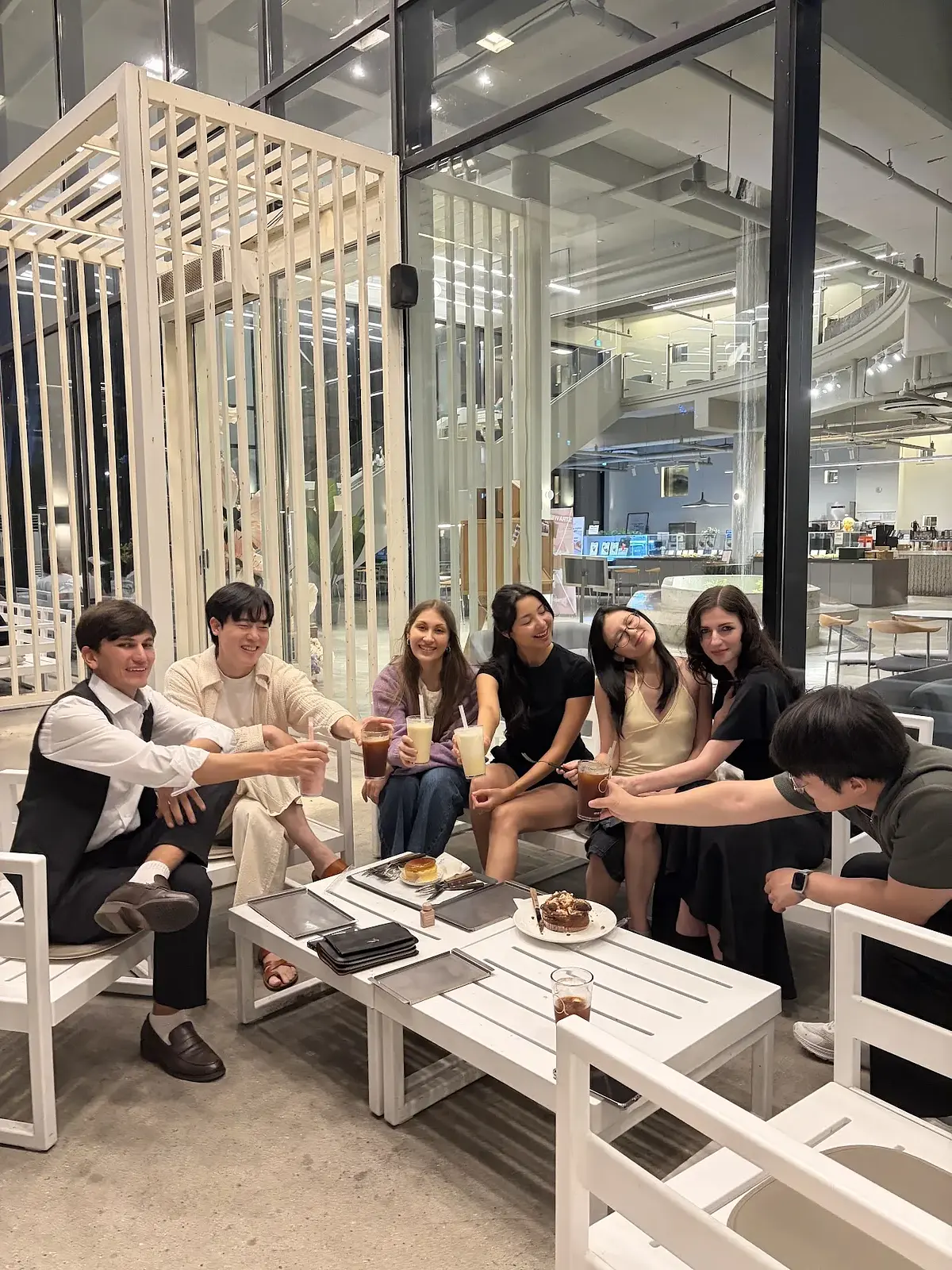
You're both there for the same reason.
That's a huge difference.
2. Have a Reason to Keep Talking
Here's a little secret:
Friendships are easier when you don't have to force the friendship.
The easiest way to make that happen is to find something you genuinely enjoy doing with other people and become a regular member.
Here some ideas:
- ⚽ Sports clubs
- 🏃 Running groups
- 🥾 Hiking groups
- 📚 Book clubs
- 🎲 Board game groups
- 🍳 Cooking classes
- 📸 Photography clubs
- 🎨 Art or drawing groups
- 💃 Dance classes
- 🎸 Music groups
- 🧘 Yoga or fitness groups
- 🗣️ Language exchange
- 🎮 Gaming groups
- ☕ Café or coffee meetups
- 🐕 Dog-walking groups
- 🚴 Cycling groups
- 🏕️ Camping or outdoor groups
- 🎬 Movie or film clubs
- ✍️ Writing groups
- 🧑💻 Tech or coding meetups
- 🧶 Craft or DIY groups
- 🎤 Karaoke groups
- 🍜 Food or restaurant meetups
- 🌱 Gardening or plant groups
- 🧩 Puzzle or hobby groups
The activity gives you something to talk about without having to come up with conversation from nothing.
You play together.
You grab food afterward.
You see each other again the following week.
Someone sends a message in the group chat.
A few weeks later, someone asks:
"Are you coming this Saturday?"
That's how it happens.
Because the real goal isn't to find a place where everyone is desperately trying to make friends.
It's finding a place where you'll naturally keep seeing the same people.
You don't need to walk up to someone and say:
"Hello. I would like to become your Korean friend."
Please don't do that.
Give the relationship somewhere to go naturally.
Shared interests give you something to talk about, something to do together, and — most importantly — a reason to come back.
That's much easier than trying to manufacture a friendship out of one awkward coffee.
3. Don't Panic When Someone Asks Your Age
"So... how old are you?"
If you're from a culture where age is considered personal information, this question can feel surprisingly aggressive.
It usually isn't.
In Korea, age can help people figure out how to communicate with each other — especially when it comes to 반말 and 존댓말.
So if someone asks, don't overthink it.
Just answer.
You don't need to turn it into a philosophical discussion about why age matters.
"I'm 28."
Done.
Now everyone knows what they're working with.
4. Don't Expect One Hangout to Create a Best Friend
This is where a lot of foreigners get frustrated.
You meet someone.
You have an amazing conversation.
You think:
"We totally clicked!"
Then you exchange Instagram accounts...
And nothing happens.
Don't immediately assume they don't like you.
Friendships often need repetition.
Seeing the same person three or four times can do more than having one amazing two-hour conversation.
That's why consistency beats intensity.
Go back to the same meetup.
Join the same club.
Say hi to the same people.
Eventually, you stop being "that foreigner who came to the meetup" and become:
"Oh, you're here again!"
That's when things start changing.
5. Start With Groups
A one-on-one invitation can feel surprisingly intense when you've only just met someone.
"Want to get coffee sometime?"
Suddenly, it sounds like a date.
Or at least a Very Serious Friendship Meeting™.
A group invitation is much easier:
"A few of us are getting dinner Saturday. Want to join?"
There's less pressure.
More people means fewer awkward silences.
And if you don't click with one person, you still have five other people to talk to.
It's basically friendship on easy mode.
6. Stop Waiting for Your Korean to Be "Good Enough"
This one is important.
A lot of foreigners think:
"I'll make Korean friends once my Korean gets better."
Maybe.
But if you wait until you're fluent, you might spend years waiting.
Your Korean doesn't need to be perfect.
Actually, making friends can be one of the best ways to improve it.
You say something wrong.
They laugh.
You laugh.
They teach you the correct expression.
You remember it forever.
That's how language actually sticks.
So don't hide behind:
"My Korean isn't very good."
Just try.
Awkward Korean is still Korean.
And honestly, awkward conversations are often how friendships begin.
So... Where Do You Actually Meet Korean Friends?
Knowing all of this is great.
But eventually you have to leave your apartment.
The good news is, you don't need to wander around Seoul hoping friendship happens to you.
Look for places where meeting people is already part of the activity.
🗣️ Language exchange meetups
Especially ones that include group activities, games, or food.
The best ones don't feel like you're being forced to interview a stranger for 30 minutes.
🥾 Hobby-based groups
Hiking.
Board games.
Running.
Cooking.
Photography.
Dance.
Whatever you're actually interested in.
When the activity comes first, friendship becomes the bonus.
🌏 Cross-cultural communities
Look for communities specifically designed to connect Koreans and foreigners.
The intent is already clear, which removes a lot of the awkward guessing.
And that's exactly the problem we wanted to solve with [App Name].
A place where you don't have to wonder:
"Are they here to date?"
"Are they trying to network?"
"Do they actually want to make friends?"
The answer is clear from the beginning:
You're here to meet people, make friends, and exchange cultures and languages.
We also run regular meetups and events in Seoul, so you don't have to figure out how to turn one random conversation into a friendship all by yourself.
The Real Secret?
Making Korean friends isn't about becoming incredibly outgoing.
It's not about speaking perfect Korean.
And it's definitely not about waiting for some magical moment when a Korean person suddenly says:
"Congratulations. You are now my friend."
It usually happens much more simply.
You meet.
You talk.
You see each other again.
You talk again.
You grab food.
Someone adds you to a group chat.
Eventually, you realize you're no longer trying to make Korean friends.
You already have them.
So don't worry about making the perfect first impression.
Just find the right people, show up consistently, and give the friendship some time to develop.
That's usually how it starts.